The Annotated Stack (January) Monthly Reflections on Reading and Making
How books shape practice, perception, and the cultural life of design
Link to my Substack Essay here
The Annotated Stack is a reading project built around a conviction that books can change how we engage with our surroundings, in the ways we design, build, make, and interpret our surroundings. Where reading is often now reduced to consumption, speed, or content extraction, this series offers a slower, more reflective mode of engagement. This isn’t a review, it’s a collated understanding of what shifts when a particular text enters the reader’s orbit. What becomes newly visible? What ideas press against established assumptions? What practices (architectural, creative, or intellectual) become possible because of reading?
Rather than retelling arguments, the series will trace the movement between reading and making. This approach treats books as active companions in our thinking, as tools that alter perception, sharpen material sensibilities, and illuminate hidden or neglected histories (especially within architecture, craft, and the politics of material culture). For you, I hope this offers a chance to witness how critical reading becomes a form of practice, and how the materiality of thought shapes the materiality of the world. At its core, The Annotated Stack is an offer to consider your own reading life as a site of creative and intellectual transformation. To invite deeper frameworks for thinking about design, and to engage in writing through books rather than just about them, the series contributes to a broader conversation about how reading cultivates awareness, and why that awareness matters.
Making Space: Women and the Man-Made Environment
by Matrix Feminist Design Collective | Verso Books
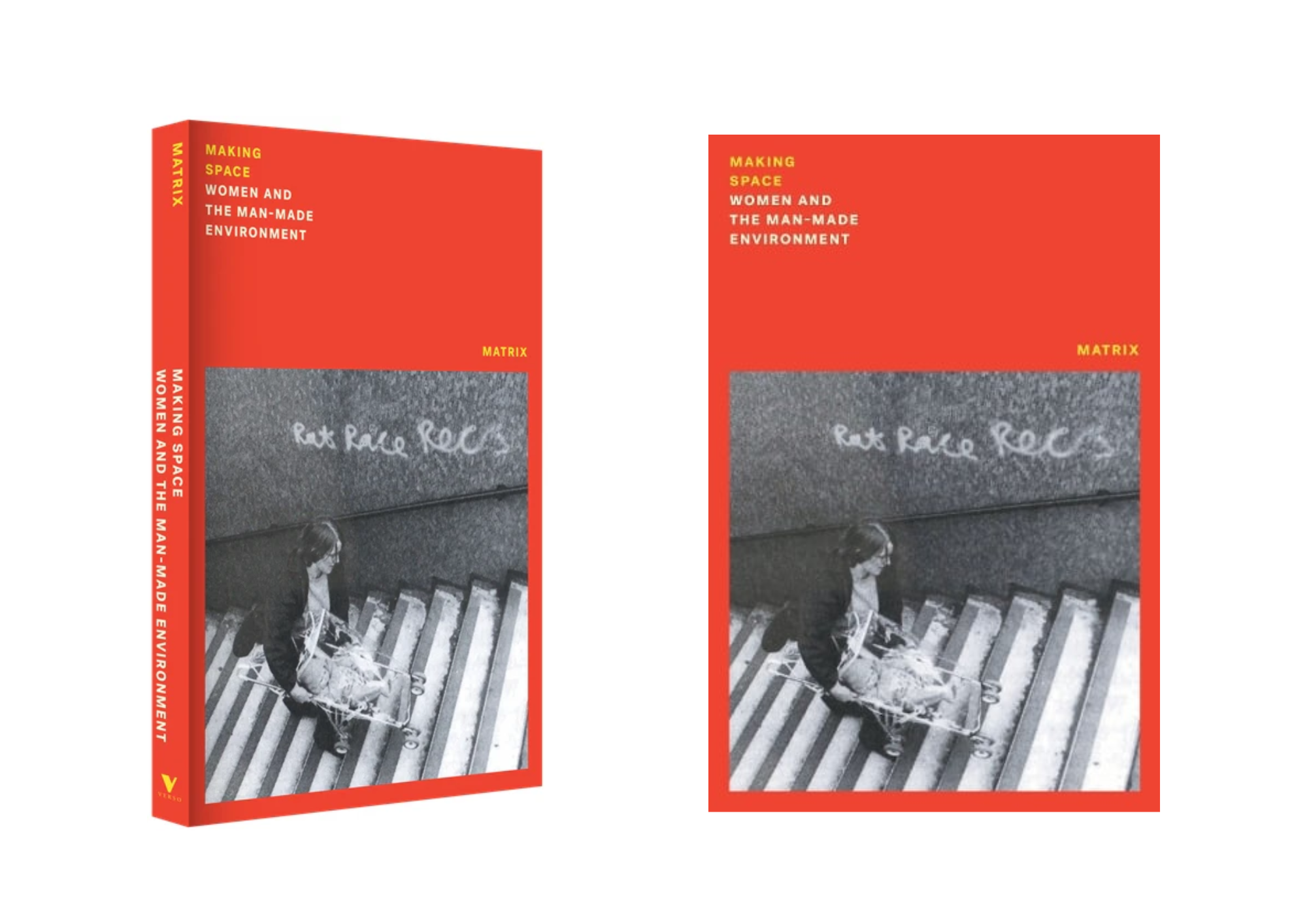
This book demonstrates that architectural power is often exercised most quietly through the spaces we take for granted. Matrix expose how kitchens, corridors, housing, and public infrastructure were designed through male assumptions, although not through malice, but an unexamined belief in a fictional “universal user.” Their feminist design methods reveal how gendered labour, embodied difference, and care work were systematically excluded from the architectural imagination.
What this taught is that the built environment is authored, and that authorship has consequences. When reading Making Space, I became aware of how often design treats women as afterthoughts. Sharpening the sense that every detail, from stair height to workplace layouts, is a decision that either expands or restricts who feels entitled to inhabit a place. For my own practice, this matters because craft, heritage, and architecture all share a lineage of uncredited labour (often women’s labour) underpinning what the world celebrates as “design.” Making Space gives me a vocabulary for questioning who is centred in spatial practice, and it reminds me that slowness, care, and material knowledge are forms of resistance against the erasure of lived experience.
Raw Concrete: The Beauty of Brutalism
by Barnabas Calder | William Heinemann
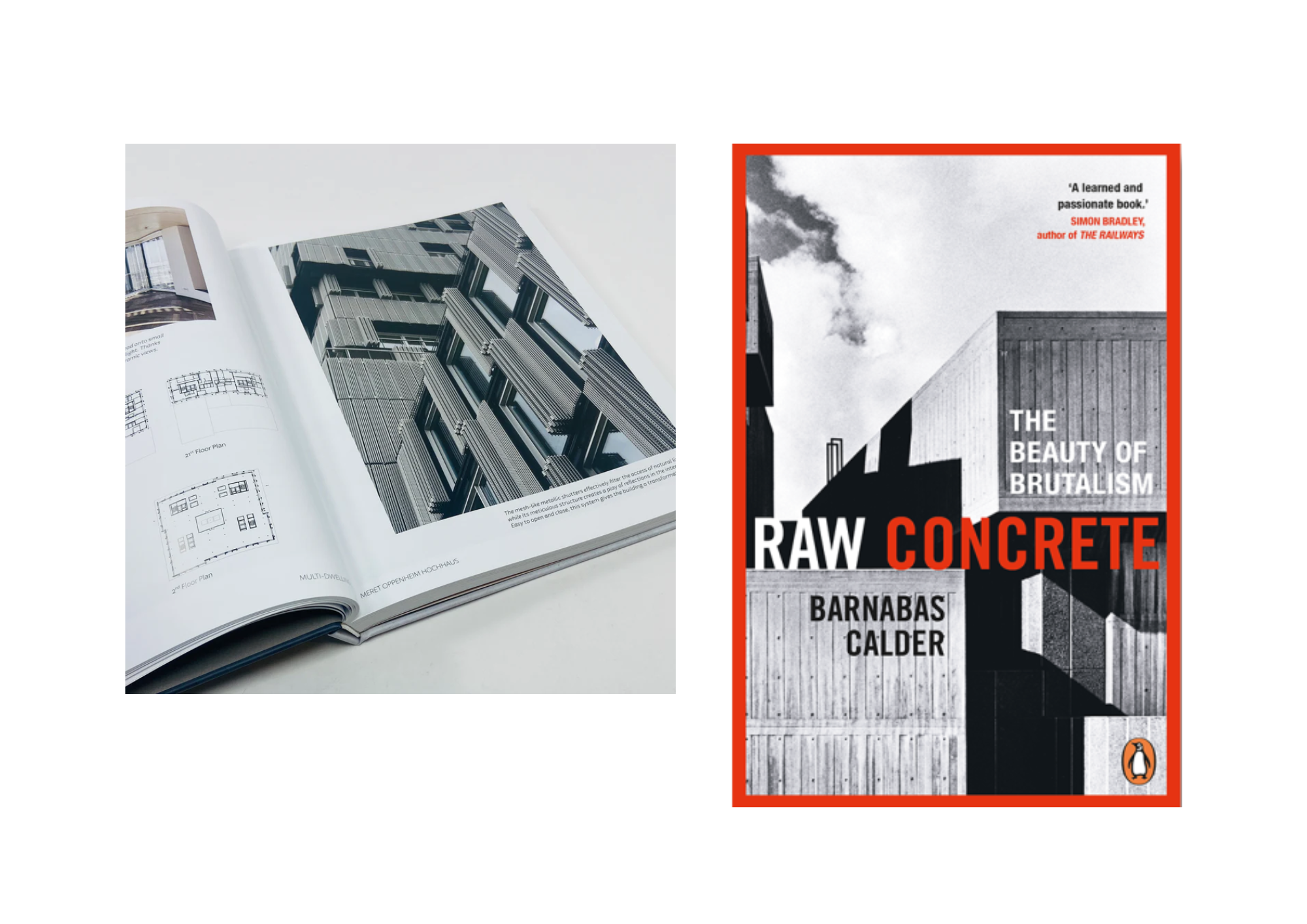
This book reframes concrete (often dismissed as cold, utilitarian, and authoritarian) as a material shaped by time, weathering, and human hands. Calder writes about brutalism not as an craft lineage, exploring the shuttering marks, imperfect pours, exposed joints, and the fingerprints of labour held permanently in the surface. He demonstrates that concrete is never truly “raw”; it is a record of decisions, improvisations, failures, and material stubbornness that designers and builders negotiate with.
Reading Raw Concrete altered how I thought and approached materials within brutalist architecture. Instead of seeing concrete as cold, my perception was changed to see concrete as another slow surface, as with conservation, one that ages, stains, cracks, and absorbs history. This book taught me that attention is a form of reverence, and that even industrial materials carry an archive of touch. It softens a material often associated with power, revealing the tenderness within its making. For someone invested in heritage, endangered crafts, and tool-making, Calder’s approach confronted and re-aligned my beliefs that materials are never neutral. That each medium holds a memory of skill. Raw Concrete reinforces that the boundary between architecture and craft is porous, and that even industrial design involves human hands.
The Edifice Complex: How the Rich and Powerful Shape the World
by Deyan Sudjic | Penguin Books
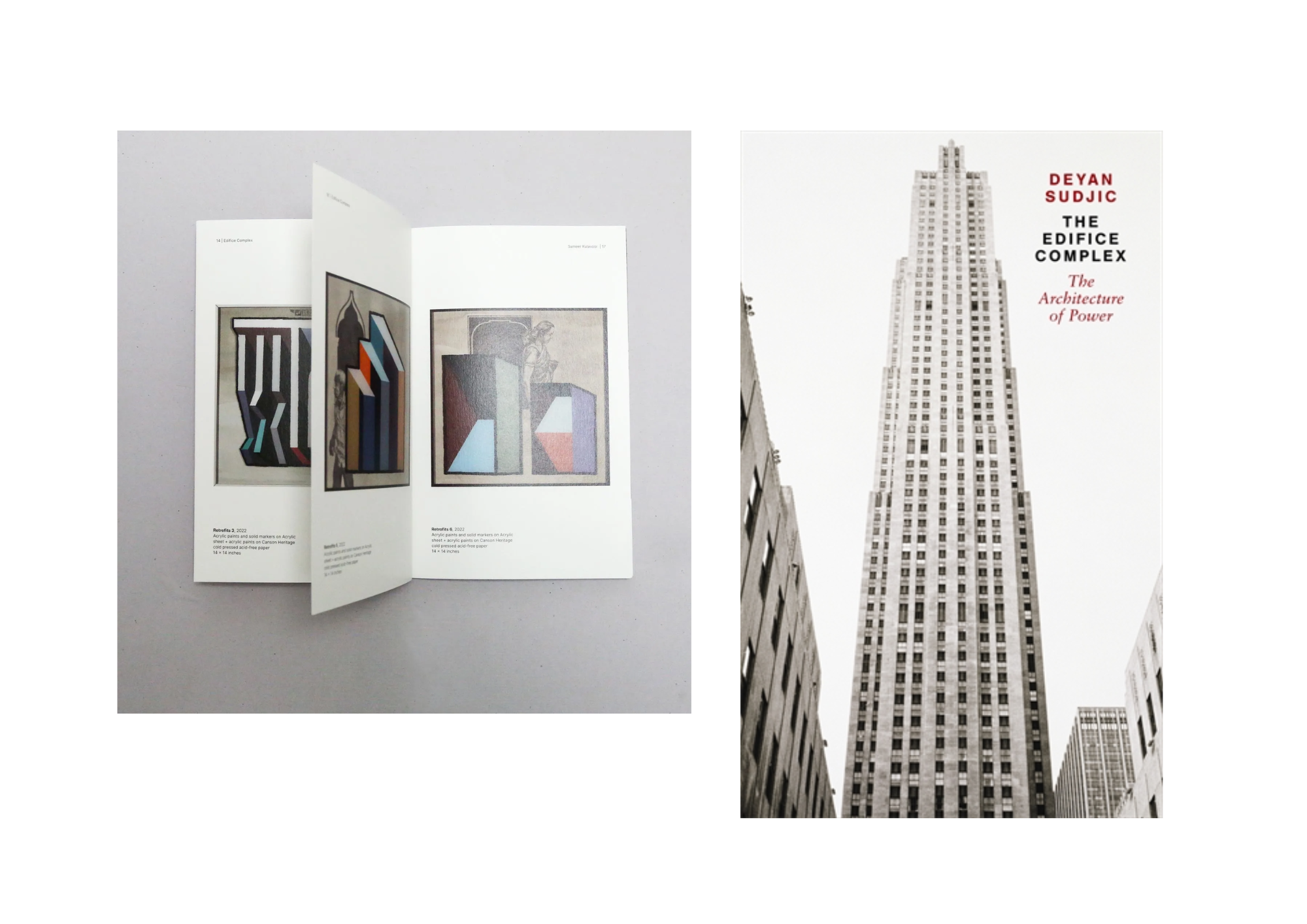
Sudjic book reveals how architecture becomes a stage set for authority, ambition, and ego. Sudjic traces how power (from dictators to developers) uses architecture to project stability, legitimacy, or futurity. That buildings themselves become instruments, and symbols designed to persuade, intimidate, or inspire. He outlines how form and façade participate in political theatre, whether through scale, material, or spectacle.
What this book taught me was that architecture is never just shelter or program, but rather it is narrative, and those narratives shape how we walk, behave, and belong. The unsettling part is recognising how often grand buildings obscure the systems behind them, all of the labour exploitation, land politics, cultural erasure. Reading Sudjic sharpened my argument and approach to how space manipulates. It also provided me the language to thoughts I’ve had for years, that monumental design often disguises extractive histories beneath polished surfaces. For my practice, which values transparency of process and the dignity of labour, this book offers a counterpoint, the reminder that materials and forms can be mobilised to consolidate power rather than support community. It reinforces my own ethics and approached to small-scale production, vernacular knowledge, and the ethics of tools. If architecture can be a tool of domination, then craft can be a tool of reparation, a slower, more accountable way of shaping the world.