What Timber Teaches Us About Repair, Continuity, and Craft Knowledge
A Reflection on Material Knowledge, Repair Culture, and the Lessons Held in Historic Timber
Link to my Substack essay here
Before beginning, I would like to acknowledge with real gratitude that I was able to attend the Repair of Old Buildings online course thanks to the SPAB Bursary. Their commitment to supporting emerging practitioners remains rare and vital, and the course continues to be one of the most substantial contributions to craft-led conservation in the UK. More information about the programme can be found through the Society for the Protection of Ancient Buildings (SPAB, 2023).
Among the most compelling components of the course was the lecture Timber Repairs by Dr Joseph Bispham (Bispham, 2023), which examined historic timber structures as living systems, which are responsive and shaped by centuries of environmental and human influence. The lecture offered a nuanced, materially grounded framework for understanding how timber behaves, how it decays, and how we repair it without severing its historic and ecological continuity.
Fear not, what follows is not a summary of the lecture, but rather a reflection on its central ideas, discussing how timber embodies knowledge, how repair is inseparable from diagnosis, and how historic structures teach us to resist contemporary habits of replacement with practices of material literacy.
Timber as a Living Material Through its Behaviour and Structure
Historic timber is a biological archive whose structure reflects the conditions of its growth, its processing, and its long life within a building. Understanding this material intelligence is essential for ethical repair. Dr Bispham began by distinguishing the anatomical components of oak (sapwood, heartwood, cambium, phloem, and bark) emphasising how each region performs a distinct ecological and structural role (Bispham, 2023). Medieval builders understood and exploited these differences, selecting timber whose radial and tangential behaviours supported their desired structural performance (Bispham, 2023). Medullary rays, for instance, act as conduits for nutrients during growth but later become key planes of movement, influencing how beams split and or accept new repairs (Bispham, 2023).
Historical woodland management practices further shaped the characteristics of oak used in medieval construction (Bispham, 2023). Coppicing and pollarding created predictable, rapid-growth smaller sections for domestic and agricultural use, while “standards” left to mature through the underwood produced long, straight timbers for principal structural elements (Bispham, 2023). Additionally, statutory requirements during the reign of Henry VIII (such as Steward’s 1523 mandate to retain a minimum number of standards per acreage) reveal the level of management involved in sustaining building-quality timber (Steward, 1982). These examples illustrate a fundamental principle of repair, that historic timber cannot be treated as interchangeable with contemporary stock. Its shape, curvature, density, and seasoning reflect specific ecological histories that modern forestry rarely replicates. Repair therefore requires an understanding of timber as a material with memory. Recognising timber as a living, historical material reframes conservation entirely. Repair is a alliance with a material that continues to respond to its environment.
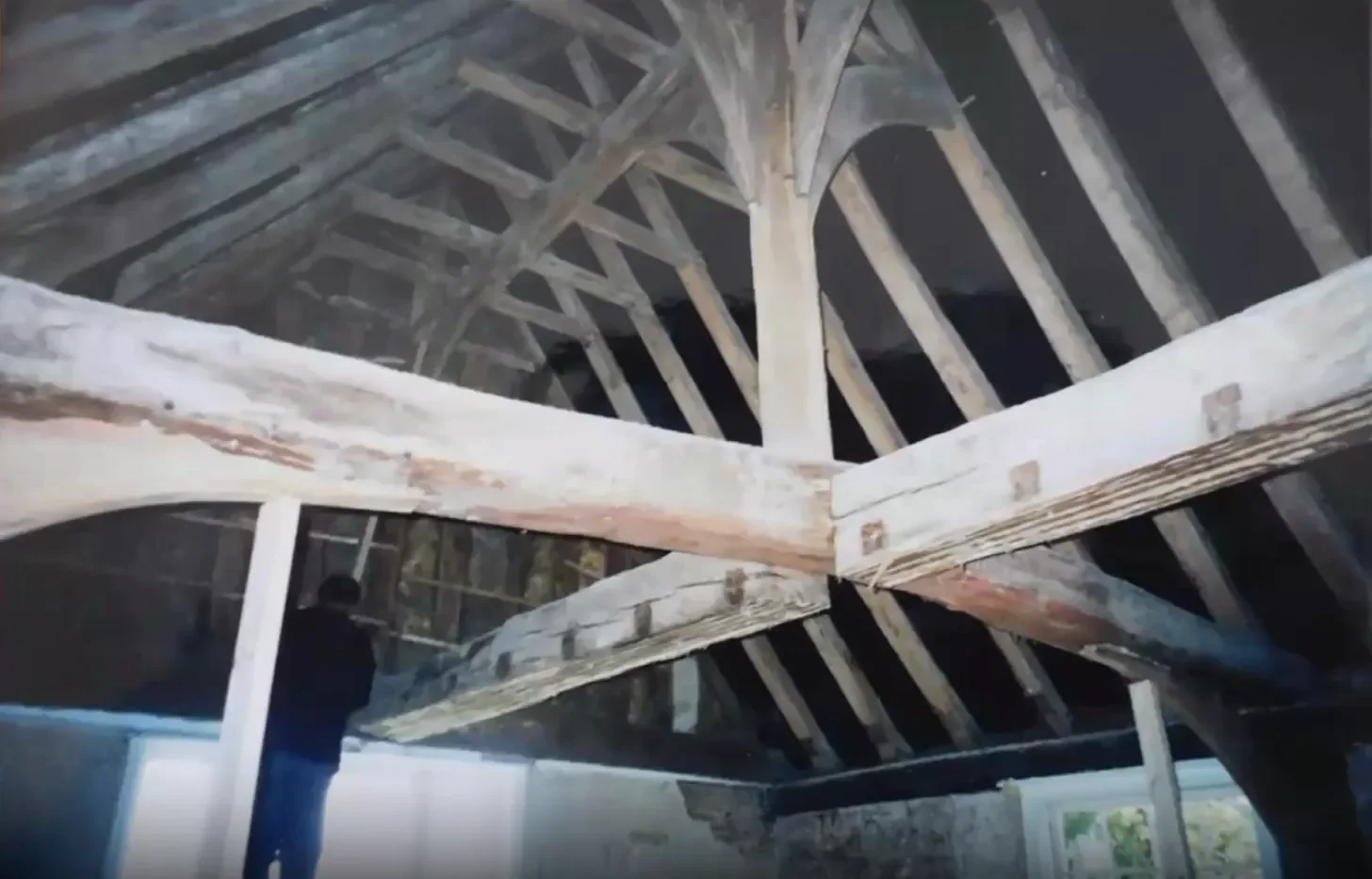
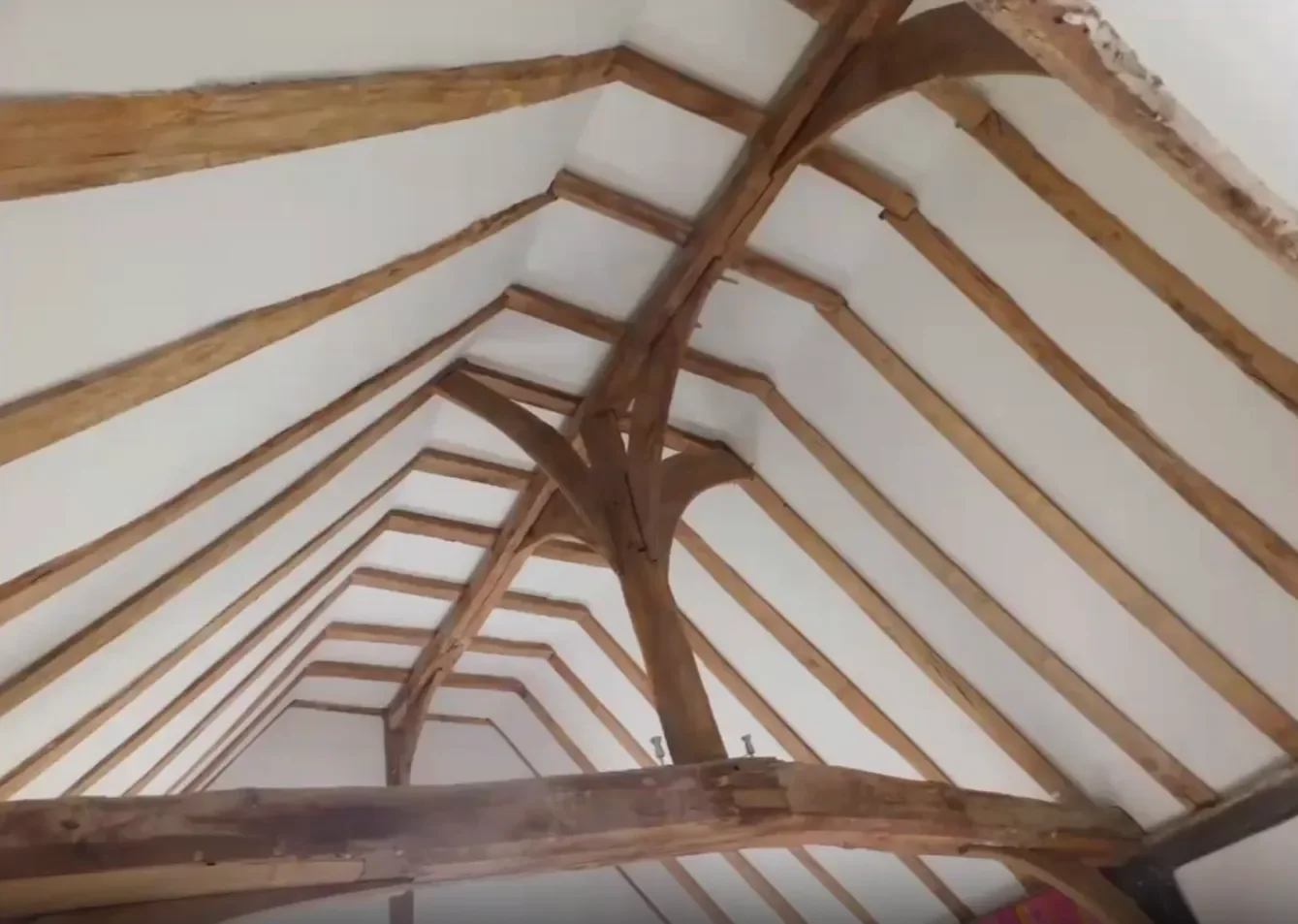
(Littley Park: photograph of roof repairs (historic or current-day structure)
Diagnosis Before Intervention: Moisture, Decay, and Movement
Successful repair depends first on identifying why timber has failed. Without accurate diagnosis (particularly of moisture pathways) even the finest materials and craftsmanship will be ineffective. As Dr Bispham stressed, timber is hygroscopic, meaning it absorbs and releases moisture until reaching its Equilibrium Moisture Content (EMC) (Bispham, 2023). Much historic failure arises not from changes in moisture regimes, i.e., ground levels raised over centuries, blocked ventilation paths, cementitious plasters, or sealed coatings that trap moisture.
Examples from Lincoln Cathedral’s roof revealed how moisture content directly determines decay. Rotten tie-beam ends were the result of long-term environmental imbalance. Equally, repairs at Beeleigh Mill demonstrated how moisture-sensitive scarf joints can succeed only if replacement timbers (in this case clear-grade Douglas fir and Scots pine) are installed at appropriate EMC levels to prevent shrinkage, splitting, and joint failure. This underscores a core conservation principle, that timber does not decay when its moisture content remains below 20% (Bispham, 2023). Many repair failures result from interventions that introduce or trap moisture rather than resolve underlying causes, and understanding moisture behaviour is therefore a diagnostic skill, not a technical add-on. In treating moisture as the primary agent of decay, rather than time itself, conservation shifts from replacement toward prevention, and thereby extending the life of historic fabric without unnecessary loss.
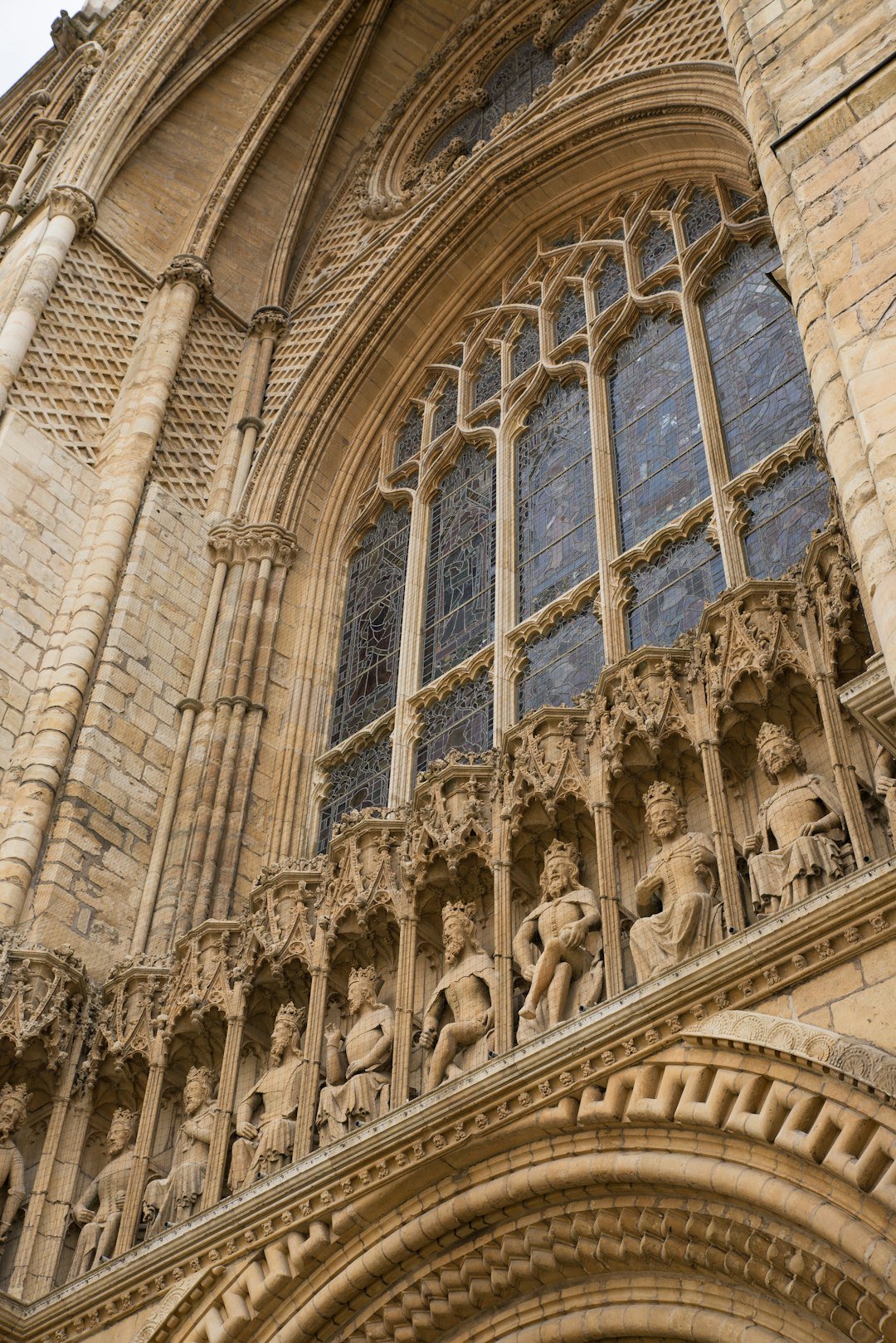
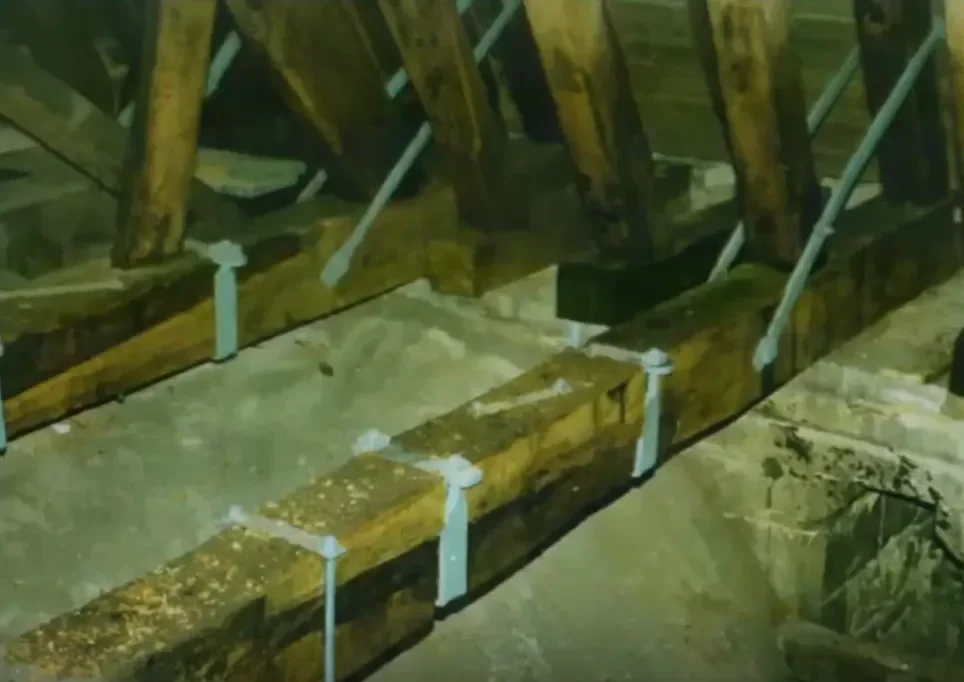
(Lincoln Cathedral roof: rotten beam ends + replacement scarf work)
Repair as Craft Practice (Scarf Joints, Competence, and Continuity)
Repair is a craft discipline, where skilled joinery methods ensure that new material supports but does not overwhelm existing fabric. Dr Bispham presented numerous examples of complex joints (stop-splayed scarfs with under-squinted abutments, haunched tenons, and wedge-tabled repairs, etc.) that enable damaged ends of beams, mullions, or stiles to be replaced without sacrificing the whole element (Bispham, 2023). These joints rely on grain alignment, sufficient bearing surfaces, and mechanical fixings appropriate to exposure and load (Bispham, 2023). Projects such as the crown-post repairs at Littley Park demonstrated the accomplishment of these methods over decades(Bispham, 2023). Twenty years after the intervention, minimal shrinkage between the fifteenth-century tie beam and twentieth-century repair work demonstrated how attentive craft practice can stabilise historic structures without visually or materially overwhelming them (Bispham, 2023).
These examples actively demonstrate why craft competence is central to conservation and how the success of a repair depends on executing contemporary repairs at the same level of skill. Modern adhesive technologies or mechanical fixings cannot substitute for correct grain orientation, accurate cutting, and material knowledge. Repair is therefore a pedagogical act, that transmits historic knowledge forward by replicating the standards that produced the original work.
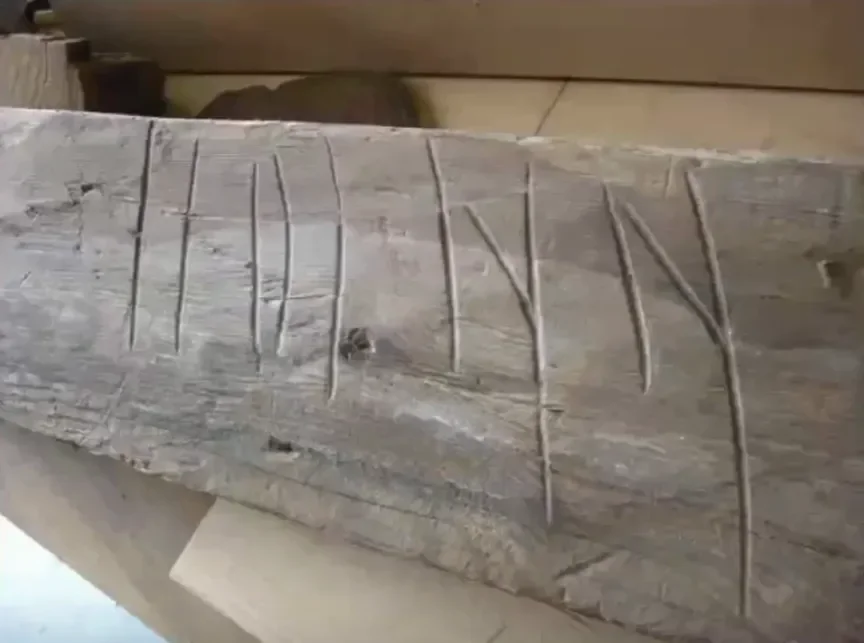
(Bracking Marks: Baltic Pine, 18th Century)
Species, Provenance, and Ethical Substitution
Within conservation, repair materials must be selected not only for durability but for compatibility, anatomical, mechanical, and cultural. The lecture emphasised species identification and grading, such as Scots pine (Pinus sylvestris), Baltic redwood, Douglas fir (Pseudotsuga menziesii), and English versus French oak grading classifications (Bispham, 2023). Each species exhibits different growth-ring prominence, density, and movement characteristics, all of which influence performance in external joinery or structural replacement (Bispham, 2023).
Historically, imported Baltic pine in the eighteenth century transformed London’s joinery practices. Timber wharves on the Thames became major distribution hubs, supplying the growing demand for sash windows and refined mouldings (Bispham, 2023). Bracking marks on surviving timbers still reveal trade routes and grading systems, demonstrating how material availability shaped architectural detail (Bispham, 2023). Understanding these material histories allows repairs to be made with species whose behaviour aligns with the original, “Like for like” is technical approach (Bispham, 2023). Mis-matched species can introduce differential movement, stress concentrations, or moisture traps that accelerate decay. Therefore, choosing the right timber strengthens the continuity between past and present, preserving both fabric and knowledge.
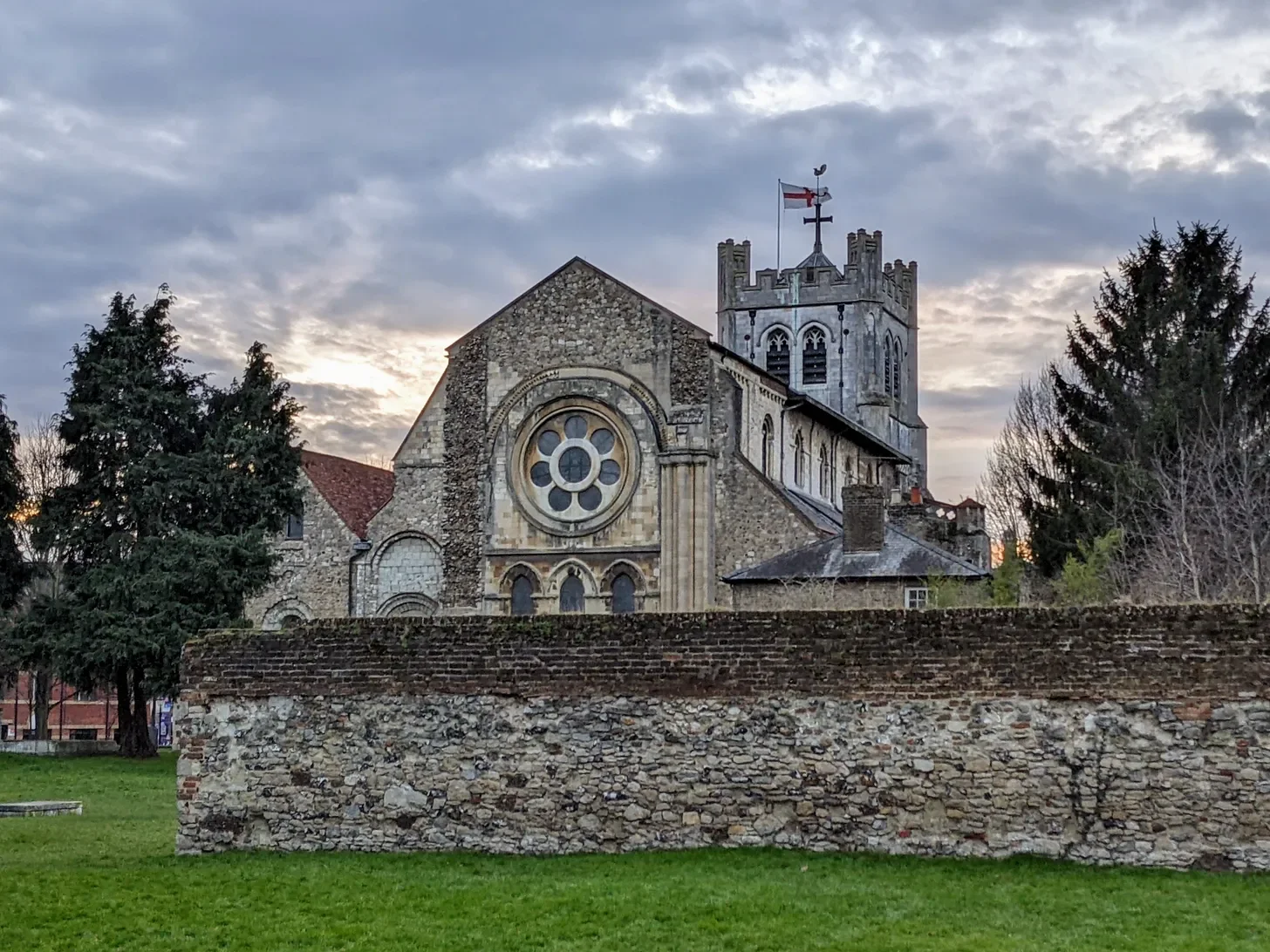
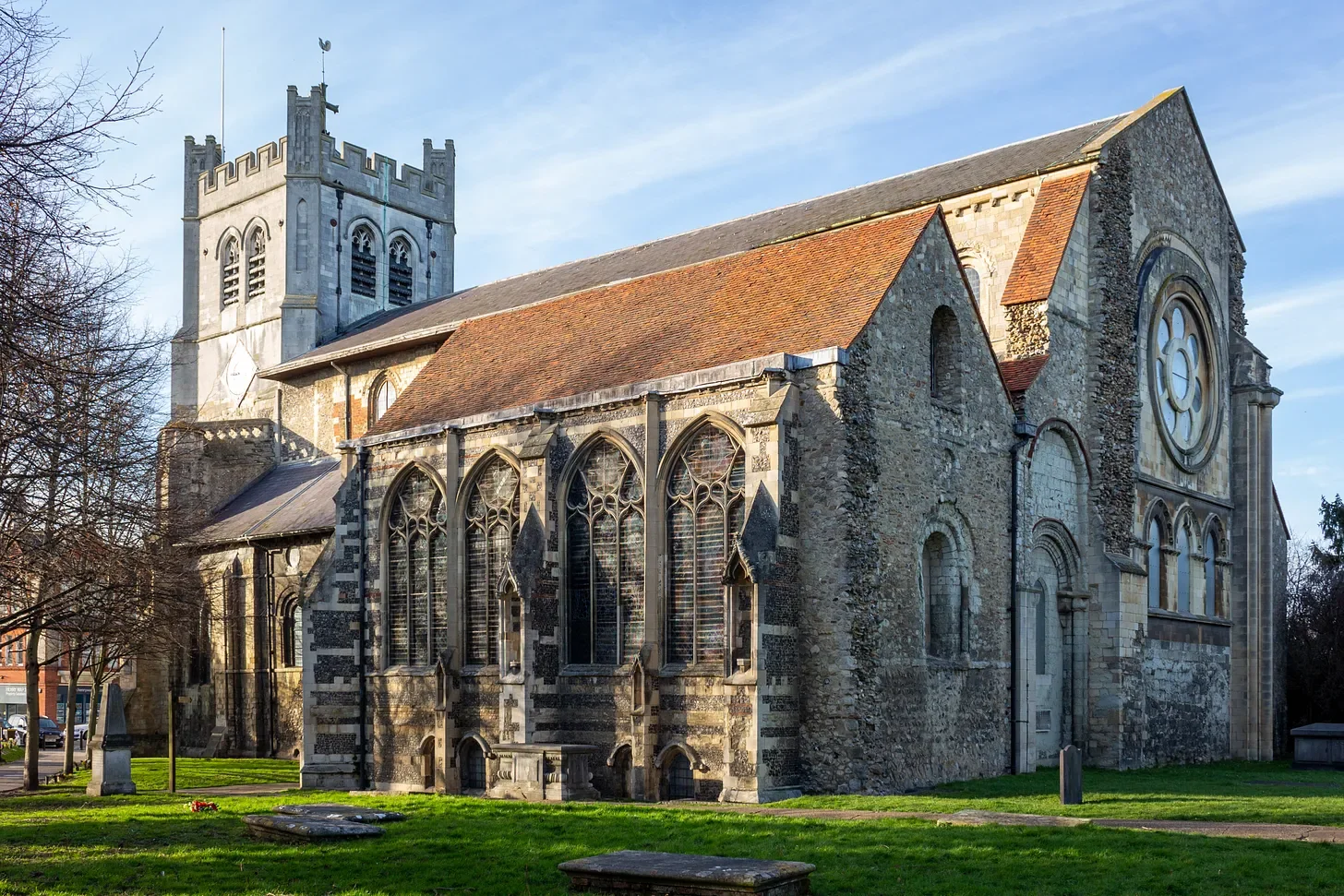
(Waltham Abbey sole plate: lamination or replacement techniques)
Protection, Prevention, and the Ethics of Minimal Intervention
Timber repair is also about preventive care, utilising treatments and management strategies that respect both the fabric and the surrounding ecology. Boron-based preservatives, such as disodium octaborate tetrahydrate, offer low-toxicity, non-invasive treatment options that kill wood-boring insects without harming wider ecosystems (Bispham, 2023). They do not off-gas, do not evaporate, and remain within the wood, making them appropriate for internal and sensitive historic environments (Bispham, 2023).
Historical commentary, such as William Salmon’s 1734 observation on the necessity of regular painting for external joinery, reinforces the long-standing understanding that protection is a maintenance strategy, not only a contemporary intervention (Bispham, 2023). Whereby paint systems, breathable stains, and controlled moisture levels remain key to prolonging timber life (Bispham, 2023). Minimal intervention is a commitment to targeted, conservation-led decision-making. Repair succeeds when it preserves the maximum amount of original fabric while restoring structural integrity and environmental balance. In this sense, repair is stewardship, a long-term commitment to sustaining material histories through care rather than replacement.
What Timber Repair Teaches Us About Conservation Today
Dr Bispham’s lecture offered a compelling prompt that timber repair is ultimately a form of knowledge preservation. Whereby each joint, scarf, or replacement section is an encounter with the intentions and skill of historic craftspeople. To repair historic buildings responsibly is to recognise that the fabric is not static, and then rather it is an ongoing record of biological growth, human intervention, and environmental change. What emerges is a conservation philosophy grounded in humility. Repair is an attentive conversation with materials that have endured for centuries. It requires not only technical competence but an understanding of timber as a living archive, that rewards patience, diagnosis, and respect for the long timelines involved in building craft.
Attending the SPAB course underscored that the future of conservation depends as much on the revival of material literacy as on policy or technology. Where timber survives, knowledge survives. Repair keeps both alive.
References
Bispham, J. (2023) Timber Repairs. Lecture for the SPAB “Repair of Old Buildings” Online Course. Society for the Protection of Ancient Buildings
Salmon, W. (1734) A Dissertation Concerning the Form, Building, Furniture, and Economy of a House. London: C. Rivington
SPAB (2023) Repair of Old Buildings Online Course. Available at: https://www.spab.org.uk/whats-on/online-repair-old-buildings-course (Accessed on: 26.11.2025)
Steward, J. (1982) Woodland Management in Tudor England. Oxford: Oxford University Press.