Tools for Slowness
Why Handmade Objects Still Matter in an Age of Disposable Making
Link to my Substack essay here
The contemporary creative landscape is defined by an accelerating pace of production, where digital tools, automated processes, and mass-manufactured materials have reshaped not only how we make, but how we think about making. Design software collapses days of sketching into minutes of parametric manipulation, while next-day delivery models encourage habits of consumption where tools are cheap, replaceable, and peripheral to creative identity. Simultaneously, traditional craft industries (including brush-making, timber turning, and small-batch casting) have contracted to the point of endangerment, with their skills held by shrinking communities and their material knowledge often undocumented.
This disjunction between speed and slow knowledge creates a cultural contradiction, whereby the tools required for meaningful, embodied creative work are increasingly produced in ways that contradict the values of craft, continuity and care; and why, amid the withdrawal of heritage skills, small craft objects offer a quiet form of resistance to disposability.
Craft Knowledge and the Vanishing Toolmaker
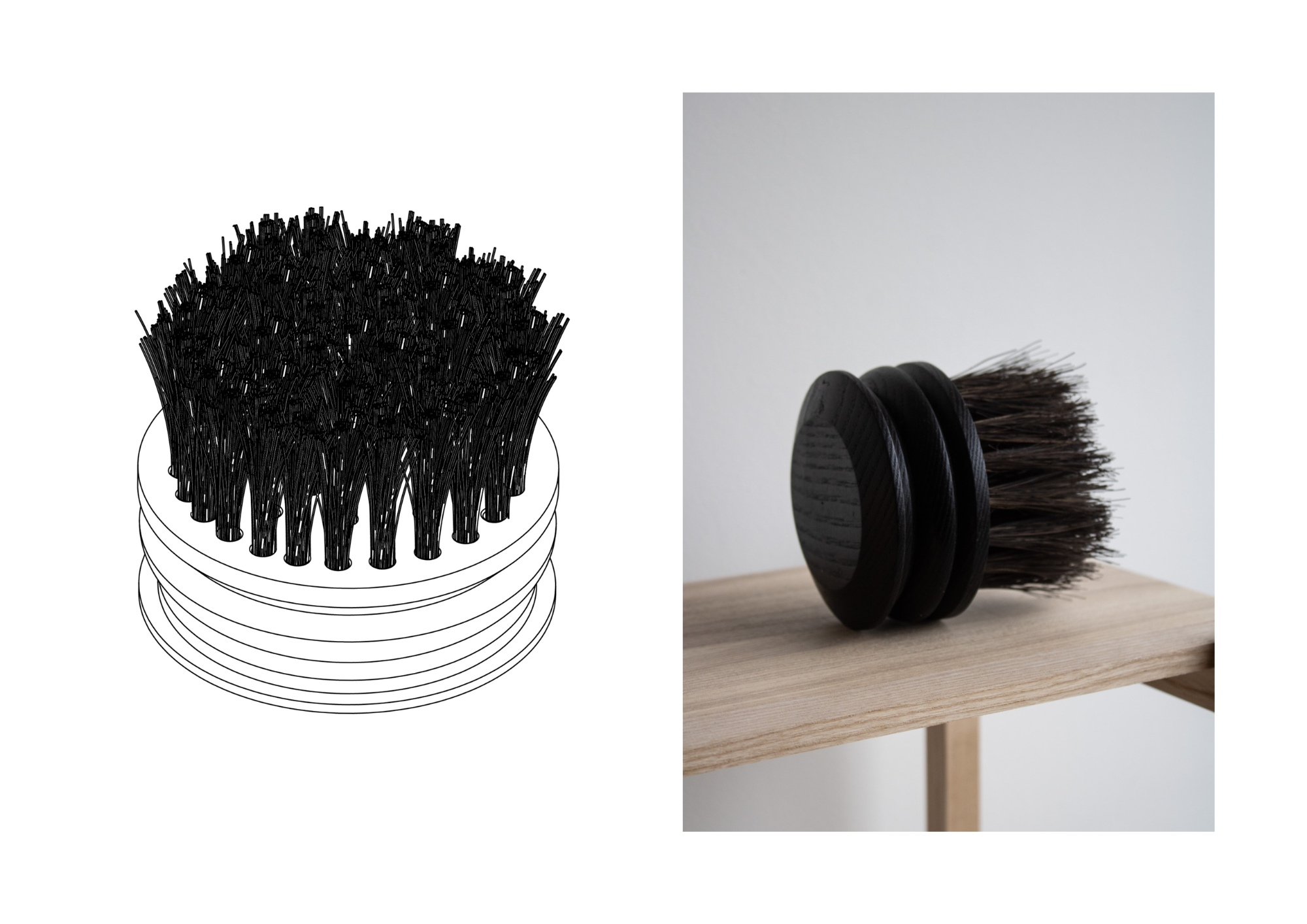
Tools have always been known as mediators of knowledge, and their forms emerge from the environments, materials, and labour systems that produced them. When those systems collapse, tools become thinner, cheaper, and less instructive. The UK brush-making sector historically relied on regionally specific knowledge, the skills of hand-drawn natural fibre bundles, steam-bent timber handles, and local bristle specialists who differentiated between fibre spring, absorption, and break-in time. Today, only a handful of makers remain, with many relying on imported synthetic bundles rather than heritage fibres.
Similarly, British woodturning traditions (especially those relying on green oak, hedge-laying offcuts, and workshop scrap) have contracted due to changing forestry practices, the decline of apprenticeship pathways, and the replacement of turned timber objects with injection-moulded plastics.
When tools shift from handmade to mass-manufactured, it is not only their physicality that changes. Their epistemic function (the way they teach us about material behaviour, pressure, absorption, and wear) is replaced with smooth, predictable surfaces designed for consistency, not meaning. Against this backdrop, slow tools offer a reinstatement of embodied knowledge within the act of making.
Material Evidence: Reclaimed Wood, Natural Fibre, and Beeswax
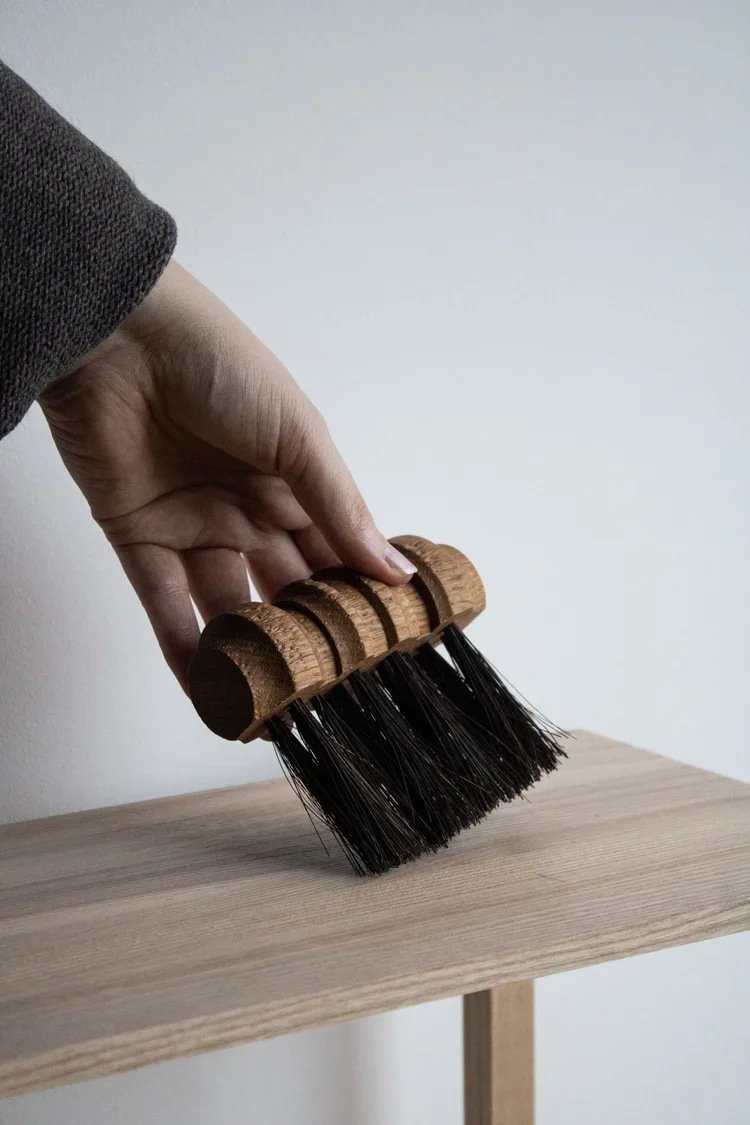
The materials used to make tools determine not only their performance but also their cultural and environmental significance. Material choice is itself part of the argument. Reclaimed oak, with its visible grain and previous life marks, stands in contrast to composite handles designed for uniformity. Grain structure affects weight distribution, grip, and the micro-vibrations transferred from brush to hand. Each variation, rather than being a flaw, becomes a record of material history. Arena Fibre bristles (a natural fibre used in heritage brush making) inherently behaves differently from synthetics, they hold slip and glaze differently, release pigment with subtle irregularity, and soften with use. Their break-in period is not a defect but a phase of mutual adaptation between brush and maker.
Materials such as this resist the smooth predictability of synthetic tools. They require attention, maintenance, and an acceptance of variability and irregularity. They reward slowness because they do not behave identically each time; rather. they invite a relational form of making where precision emerges through familiarity.
Slowness as Craft Praxis
Slowness is often misunderstood as inefficiency, although in craft it functions a more of attending to processes that cannot be rushed without compromising integrity. Processes such as timber seasoning, fibre bundling, or wax casting follow non-negotiable temporalities. Wood must dry at the rate determined by its species and previous environment, the same as how beeswax requires cooling cycles that cannot be accelerated without surface disruption.
Craft theorists including David Pye, Glenn Adamson, and Tanya Harrod argue that slowness is an essential condition for skill transmission. Pye’s concept of the “workmanship of risk” highlights how the value of craft lies in the maker’s responsive adjustments, something impossible under accelerated, automated production (Pye,1968) Slowness, therefore, is a willingness to be shaped by material resistance rather than override it. It is through slowness that hands and materials develop memory, sensitivity, and judgement, capacities that cannot be automated.
The Cultural Consequences of More Disposable Tools
The disappearance of slow tools has cultural implications, and how we conceptualise ingenuity itself. Disposable brushes, mass-produced modelling tools, and synthetic fibres have low entry barriers but high environmental costs. They can encourage habits of use where tools are peripheral and rarely maintained. Educational environments (particularly in art, design, and architecture) increasingly rely on toolkits where quality has been sacrificed for affordability (Risatti, 2007) Students often encounter tools that teach speed, not sensitivity, and develop a making culture where immediacy supersedes material understanding (Dormer, 1997)
Therefore, with this loss of slow tools, it contributes to a broader flattening of innovative experience. When tools are designed for disposability, our relationship with materials becomes transactional rather than situated. We lose theses small rituals (cleaning, sharpening, oiling, preparing) that historically bound makers to their environments and to one another. By contrast, slow tools invite patterns of use that cultivate responsibility. They ask to be handled carefully, repaired when possible, and returned to over time. Their existence offer a model of making aligned with sustainability, that is both environmental but cultural.

Tools as Arguments (Why Making Matters Now)
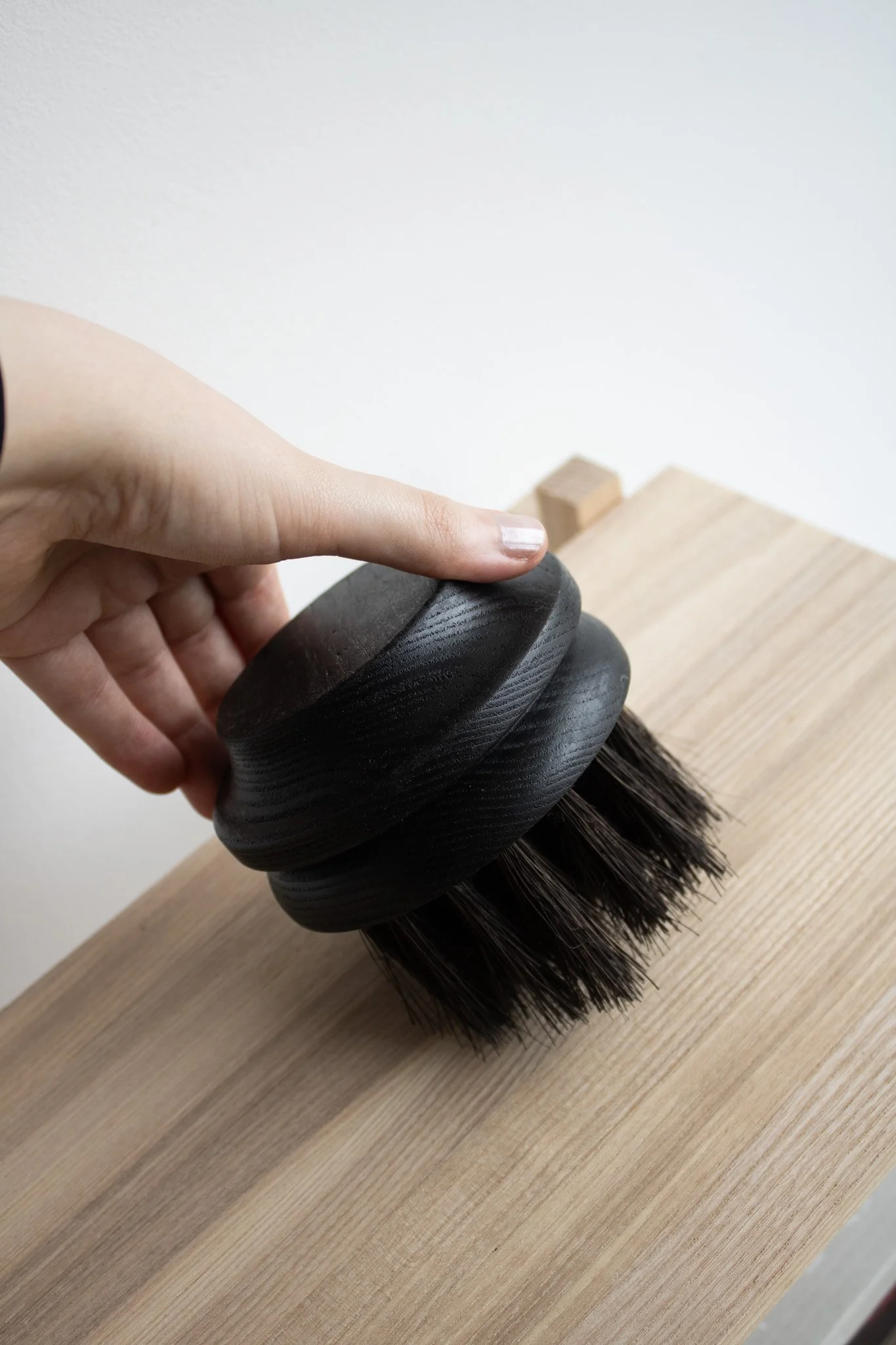
Handmade tools function as propositions, where they articulate a set of values through their materials, forms, and methods of production. For instance, a reclaimed oak brush handle is an argument for circularity. Its own material origin, demonstrates how waste streams can be re-integrated into the making process. Similarly, beeswax candles made from organic wax are arguments for atmospheric making. As they position pre-power-driven domestic spaces int the discussion, where illumination was understood as a material event rather than a background condition.
These objects communicate their values through physical behaviour. Their existence through their slowness, and their variation make visible the principles they embody; continuity and respect for material temporality. In this sense, craft objects function as tools for thinking as much as tools for making. They shape not only what we produce but how we understand the labour, history, and ecology that linchpin their production.
My Own Position, Making as Research
The creation of these objects emerged not only from a desire to produce commodities but also from a continuation of my material and architectural research. These hand-turned brushes developed from my investigation into endangered British craft skills and material heritage, where I examined the ways small trades encode local knowledge within their tools. The beeswax candles evolved from my interest in atmosphere, temporality, and the domestic history of light, a study of how warm illumination informs spatial perception and embodied calm.
Both object lines are extensions of my own prior inquiry, linking my writing, production, architectural history, and material practice into a single discipline centred on attention and the endurance of craft skills and materiality.
For this reason, the objects launched today are modest in number. They are not mass-produced as they exist as bespoke companions to the ideas explored in these essays, and as tools that (I hope) invite slower, more attentive forms of making.
The first objects available in my shop are
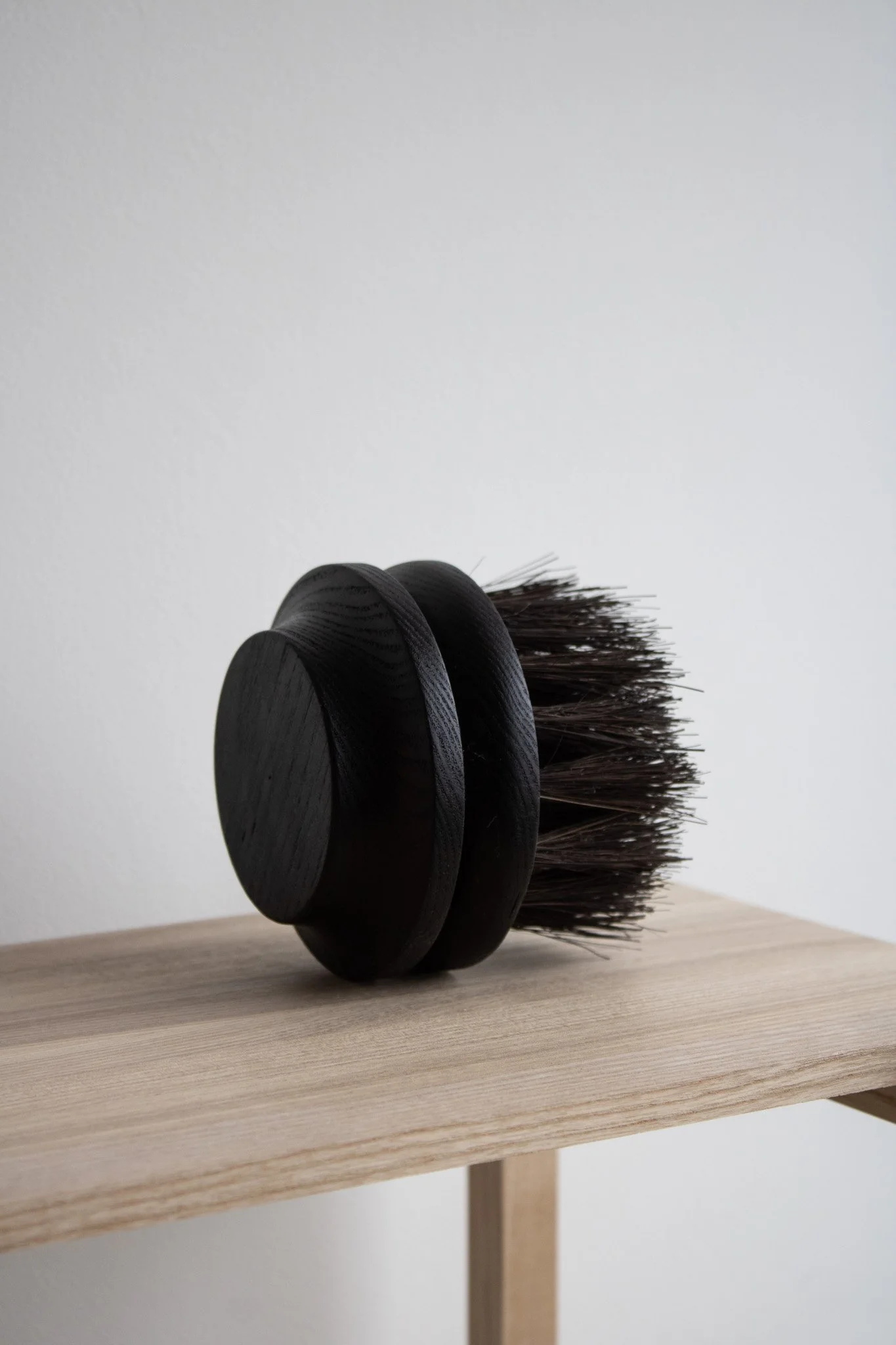
Hand-turned brushes | made from reclaimed oak and Arena Fibre bristles
Organic beeswax candles | cast individually in ribbed forms

They are small-batch, varied, and shaped by the material constraints they honour. If the essays I explore on this Substack have explored slowness, heritage, and endangered skills in theory, these tools represent the same values in practice.
What Slow Tools Teach Us
Slow, handmade tools illuminate a fundamentally different relationship to making, that is grounded in reciprocity and continuity rather than disposability. Their irregularities, their demand for care, and their rootedness in specific material histories offer a counterpoint to the frictionless consistency in comparison to mass-produced tools. Their existence remind us collectively how skill develops through negotiation, and materiality and that meaningful innovative practice relying on tools that teach as much as they perform.
Contemporary culture privileges acceleration, and slow tools invite a return to deliberateness. Orienting us toward forms of producing where materials are active collaborators that shape the rhythm and ethos of the work. Additionally, these tools preserve knowledge at risk of disappearing, not only through technical skill, but through the slower sensibilities of material intelligence that linchpin sustainable innovative practice.
For those interested in encountering these ideas in a tangible form, I have released a small batch of hand-turned brushes and organic beeswax candles, each made with the materials and principles discussed here. They are available through my shop, that embody the values explored throughout this essay.
References
Pye, D. (1968) The Nature and Art of Workmanship. Cambridge: Cambridge University Press
Adamson, G. (2013) The Invention of Craft. London: Bloomsbury
Harrod, T. (2018) The Real Thing: Essays on Making in the Modern World. London: Hyphen Press
Risatti, H. (2007) A Theory of Craft: Function and Aesthetic Expression. Chapel Hill: University of North Carolina Press
Sennett, R. (2008) The Craftsman. New Haven: Yale University Press
Dormer, P. (1997) The Culture of Craft. Manchester: Manchester University Press